

The Indian Space Research Organisation (ISRO) achieved a major milestone with the successful launch of the BlueBird Block-2 communication satellite aboard the LVM3-M6 mission. The launch marks the sixth operational flight of the LVM3 launch vehicle, India’s heavy-lift rocket, and represents a significant step forward in the country’s space and satellite launch capabilities.
The LVM3-M6 mission is notable for carrying the heaviest payload ever launched by the LVM3 rocket, demonstrating ISRO’s growing expertise in handling large and complex space missions. The rocket performed as planned and successfully injected the BlueBird Block-2 satellite into Low Earth Orbit (LEO), meeting all mission objectives.
BlueBird Block-2 is described as the largest communication satellite launched so far, underscoring the scale and ambition of the mission. Communication satellites play a crucial role in modern society, supporting services such as broadband connectivity, data transmission, and secure communications. The successful deployment of such a large satellite highlights ISRO’s ability to support advanced space-based communication infrastructure.
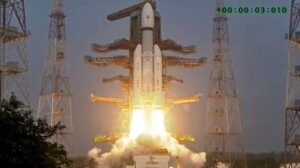
The LVM3 launch vehicle, earlier known as Gaganyaan Launch Vehicle (GSLV Mk III), has steadily evolved into a reliable and powerful rocket. With each successive mission, ISRO has expanded the vehicle’s payload capacity and operational confidence. The LVM3-M6 flight further strengthens the rocket’s reputation as a dependable launcher for heavy satellites and future human spaceflight missions.
This mission also reflects ISRO’s growing presence in the global space sector. By successfully launching one of the largest communication satellites and its heaviest payload to date, ISRO demonstrates its readiness to support both national objectives and international commercial missions. Such achievements enhance India’s standing as a competitive and reliable spacefaring nation.
Engineers and scientists closely monitored every phase of the launch, from liftoff to orbital injection. The flawless execution of the mission highlights years of planning, testing, and technological development. It also showcases the teamwork and precision that define ISRO’s approach to space exploration and satellite deployment.
The success of the BlueBird Block-2 launch is expected to open new opportunities for advanced communication services and future satellite missions. It also builds momentum for upcoming LVM3 flights, including missions involving heavier payloads and more complex orbital insertions.
With the LVM3-M6 mission, ISRO has once again demonstrated its ability to push technological boundaries while maintaining reliability and efficiency. The launch of BlueBird Block-2 stands as a testament to India’s growing strength in space technology and its commitment to advancing satellite-based communication systems for the future.